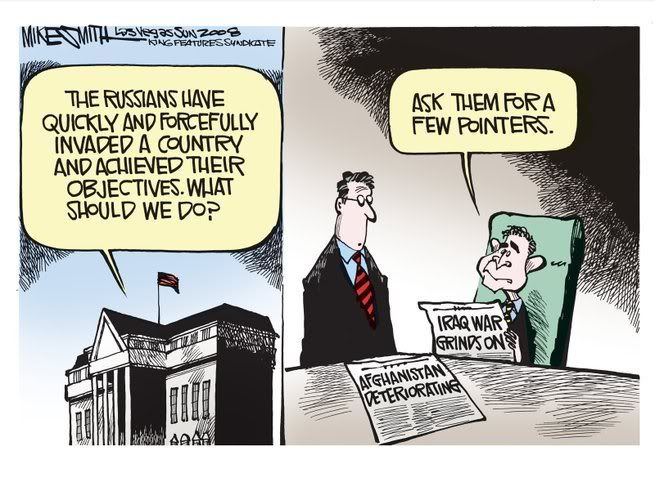
That is why there is no quick military solution for the empire comparable to Israel's attack on the Osirak reactor in Iraq and Israel's bombing of what is said to be a nuclear facility in Syria. Iran has succeeded in the tasks of both mass education and higher education, building a deeper and broader base of scientific and technological human capital than in any other country in the region except Israel. That means that Iran can rebuild what gets destroyed.
Given its rate of scientific production, as reported in NewScientist, Iran may eventually catch up with Israel, too:
Scientific output has grown 11 times faster in Iran than the world average, faster than any other country. A survey of the number of scientific publications listed in the Web of Science database shows that growth in the Middle East -- mostly in Turkey and Iran -- is nearly four times faster than the world average.
Science-Metrix, a data-analysis company in Montreal, Canada, has published a detailed report (PDF) on "geopolitical shifts in knowledge creation" since 1980.
Is that a "threat" to Israel or the United States? Not if these two countries aren't run by people who are given to seeing the world as if it were the stage for a zero-sum game of power struggle. The question is if they are.
Apparently, Karzai didn't promise Galbraith as good a deal as the Iraqi Kurdish leaders: "Mr. Eide, who is set to leave his job as head of the United Nations mission in Afghanistan by early next year, said Mr. Galbraith's departure from Afghanistan in early September came immediately after he rejected what he described as Mr. Galbraith's proposal to replace Mr. Karzai and install a more Western-friendly figure" (James Glanz and Richard A. Oppel, Jr., "U.N. Officials Say American Offered Plan to Replace Karzai,"New York Times, 17 December 2009).
If Washington is smart, it will try to peel China away from Russia, dropping Tibet and Xinjiang in particular and human rights in general. Then again, though, if Washington were really smart, if wouldn't have invaded Iraq and Afghanistan and tried to work against both Iran and Russia at the same time. Meanwhile, the Chinese are dropping the US agency debt.
If there is one word that defines Barack Obama's campaign, it's not the noun "change" but the adjective "careful," which he adds to essentially the same policy as John McCain's: "As I’ve said many times, we must be as careful getting out of Iraq as we were careless getting in" (Barack Obama, "My Plan for Iraq,"New York Times, 14 July 2008)1; and "we have to compromise in terms of a careful, well thought-out drilling strategy that was carefully circumscribed to avoid significant environmental damage" (David Lightman, "In Major Change, Obama Says He'll Support Offshore Drilling," McClatchy Newspapers, 1 August 2008).
"Senator Barack Obama said Thursday that he might 'refine' his plans for a phased withdrawal from Iraq after meeting with military commanders there later this summer" (Michael Cooper and Jeff Zeleny, "Obama Strives to Retain Some Flexibility on His Iraq Policy,"New York Times, 3 July 2008).
So far, he has offered nothing more concrete than this: "We must be as careful getting out of Iraq as we were careless getting in."
Obama's advisers have been more forthcoming. Samantha Power, before she resigned from the campaign for making an indiscreet remark about Hillary Clinton, told the BBC, "He will, of course, not rely upon some plan that he’s crafted as a Presidential candidate or a U.S. senator. He will rely upon a plan -- an operational plan -- that he pulls together in consultation with people who are on the ground." Last month, the Center for a New American Security, which has become something like Obama’s foreign-policy think tank, released a report that argued against a timetable for withdrawal, regardless of the state of the war, and in favor of "conditional engagement," declaring, "Under this strategy, the United States would not withdraw its forces based on a firm unilateral schedule. Rather, the time horizon for redeployment would be negotiated with the Iraqi government and nested within a more assertive approach to regional diplomacy. The United States would make it clear that Iraq and America share a common interest in achieving sustainable stability in Iraq, and that the United States is willing to help support the Iraqi government and build its security and governance capacity over the long term, but only so long as Iraqis continue to make meaningful political progress." It's impossible to know if this persuasive document mirrors Obama’s current thinking, but here’s a clue: it was co-written by one of his Iraq advisers, Colin Kahl. (George Packer, "Obama's Iraq Problem,"The New Yorker, 10 July 2008)
On the occasion of US Democratic presidential candidate Barack Obama's visit to Berlin, Christine Buchholz, a member of the Left Party executive board, comments:
Many hopes are tied to Barack Obama, since George W. Bush is the most unpopular American President ever, and Obama promises to improve the social situation and bring the Iraq War to an end.
However, Obama is making a big mistake by identifying Afghanistan as the main battlefield of the "war on terror" and declaring that he will redeploy up to 10,000 more soldiers to the Hindu Kush. The Iraq War has shown that what the United States and the NATO care about is not freedom from terrorism but their interests in natural resources in a strategically key region. The war has increased, rather than decreased, the danger of terrorist attacks.
If Obama really seeks to change foreign policy, he must break with Bush's war-mongering. He should withdraw the troops not only from Iraq but also from Afghanistan and refrain from threatening war against Iran. The war in Afghanistan is as unwinnable as the war in Iraq. Afghanistan threatens to become Obama's Vietnam if he doesn't have the courage to defy the neoconservatives and the ruling class.
The Left rejects the transparent plan of the German Federal Government, with Obama's backing in autumn, to have the Bundestag extend the mandate and increase troops in Afghanistan. War cannot bring peace to Afghanistan. The German Armed Forces must leave Afghanistan. The original statement in German was made available on the Web site of Die Linke on 24 July 2008. Translation by Yoshie Furuhashi.
Iraq: We All Work for the Casino in the Green Zone An Interview with Martin Eisenstadt As you know, there's a talk of developing the Green Zone. The Marriott Hotel chain is here, and I too am involved in hospitality. I'm representing interests that are building a hotel. . . . Five stars, a casino, gambling, and it's going to be here in the Green Zone.
The sponsors are a Dubai-based company which has a lot of experience with hotels and casinos in the Middle East. And there's also a Las Vegas partner.
There's a lot of disposable wealth now in this region, as you must know -- a lot of foreign investors, foreign contractors, the troops are paid in dollars.
I'd call it a cultural center. We're excited to build hotels, to build golf courses, to bring Madonna, and to bring Elton John.
Money does talk. Democracy is the first step, but it needs to be followed by capitalism and entertainment, because that's what brings people together, and it's worked many times before. I noticed that now in the Green Zone there's even a Wendy's. Wendy's is a very famous American hamburger restaurant. . . . Do what tastes right! Yeah, Wendy's, it's an exciting process. I see the Green Zone transforming before my eyes.
And it's to the benefit of the Iraqi people, because that disposable income trickles down, as we say in America trickles down, when the people with the big money are spending that at roulettes they are also leaving tips to waiters. We have 6,000 rooms, we need many young girls to clean them. We're going to have a golf course, which needs gardeners, people with the gardening background.
The massage. We're gonna be able to bring people from all around the world, so your masseuse might actually be from the former Soviet Union or from Thailand. A boxer might come from America, mixed martial artists might come from Brazil. That's what I'm trying to convey. And there's been some lobbying, because there's a vote this week in the parliament. Democracy is vibrant, it's alive, and the Iraqis feel . . . right, the feeling is here, the feeling of democracy.
There's an issue of legalized gambling. I know in Kurdistan there is a casino that is very successful, and that's what we are trying to bring to Iraq. And I'm telling you, Iraq is already transforming, but soon it's gonna be like Berlin, it's gonna be like Okinawa, it's gonna be like Seoul, it's gonna be like Las Vegas, but within the Iraqi context, sensitive to the sensibilities of local people, of course. There'll be a mosque, a room for prayers, five times a day, there will be a call for prayers. We're gonna have a special section for Shesh Besh. Backgammon. Not just roulettes, blackjack, and poker, but a special section for Shesh Besh. So, we are going to incorporate local norms. And we are going to have off-track betting for the camel races in Dubai and countries nearby.
But yes, the pizzazz, the Vegas pizzazz, the American, can-do, let's-have-fun, we're-all-one attitude, yes, unapologetically, we're going to bring that here, but mixed with local sensibilities.
When you have a jack and a six, and you hit, everybody is in it together. That rush transcends your language, your culture, your religion. That I think is what's gonna really bring people together.
Whether you are Shia, Sunni, or Kurd, you're gonna be seen wearing the same casino uniform, with the same nameplates. which says we're all one, we all work for the casino, there are no differences between us. Our employment is going to be one third, one third, one third, so that all the peoples of Iraq are represented.
I haven't spoken as much about this in America, but I think here it's ok, it's gonna happen soon. I'm probably soon gonna be an advisor for the McCain campaign, because my candidate, Rudi Giuliani, dropped out. And I can assure you that John McCain supports this effort. John McCain will likely be the next American president. And I think the people here in Baghdad should understand that a future American president supports this endeavor.
John McCain as the head of the Indian Affairs Committee in the Senate knows hands-on, full well, the importance of development, how a casino, haw a sauna, how a golf course can transform a people, can transform a region and bring peace to groups that otherwise fight. We also had a racial conflict, between Indians, the white people, the Caucasians from Europe, and the Black people from Africa. And somehow casinos have managed to fix that divide. Only twenty years ago the Indians were drunk, and homeless, and committing crimes. Today, they're prosperous and wealthy, driving a Mercedes, with their kids with Game Boys and PlayStations, satellite dishes on their homes. And so too the Black people with sports have managed to advance themselves in this kind of entertainment sector. It's brought harmony between all the peoples. And we intend to bring the same thing here to Baghdad.
Iraq has changed. I think it's because of casinos. You find that today there's a wide consensus, across the board the American people are committed to helping Iraq see this problem through to its end. We're not gonna cut and run, we're partners, we're in this together for at least a hundred years. And I'll see you at the blackjack table. And what happens in the Green Zone stays in the Green Zone. This is a partial transcript (omitting the interviewer's questions) of a program that is said to have been broadcast on Al-Iraqia in February 2008, featuring Martin Eisenstadt speaking at the "Baghdad Business 2 Business EXPO." H/T to Juan Cole, Raed Jarrar, and Rick B. The video is (most likely) a satire.
This just in: "Militant Shiite cleric Muqtada al-Sadr called Tuesday for followers to hold weekly protests against a U.S.-Iraqi security deal under negotiation that could lead to a long-term American troop presence" (Qassim Abdul-Zahra, "Militant Cleric Urges Protests on US-Iraq Deal," Associated Press, 27 May 2008). It should be clear to the Iranians which Iraqi Shi'i faction is their best friend.
The fate of the proposed US-Iraq status of forces agreement will be a test of the degree of influence of hard-liners on Iran's foreign policy and on Shia factions in Iraq:
Strong Opposition To Proposed US-Iraq Deal,"Iran Daily, 24 May 2008 (citing Grand Ayatollah Seyyed Ali Sistani and Ali Akbar Velayati, an advisor to the leader of the Islamic Revolution on international affairs).
This just in: "Militant Shiite cleric Muqtada al-Sadr called Tuesday for followers to hold weekly protests against a U.S.-Iraqi security deal under negotiation that could lead to a long-term American troop presence" (Qassim Abdul-Zahra, "Militant Cleric Urges Protests on US-Iraq Deal," Associated Press, 27 May 2008). It should be clear to the Iranians which Iraqi Shia faction is their best friend.
Hezbollah is the big winner in the accord on Lebanon signed in Doha, Qatar. But everyone -- including Washington -- is welcoming this asymmetrical compromise. Why? Hard bargaining is underway. . . .
In the Middle East, neither the worst nor the best is ever certain. But what happened in Doha, the capital of Qatar, on Wednesday, at 3 o'clock in the morning, is a historic event. The accord putting an end -- for now -- to the political crisis that tore Lebanon for the past eighteen months (and many more in fact) contains a tough lesson for the West: its weakened friends in Beirut had to bend themselves to the force of Hezbollah and its allies Amal, another Shi'i party, and the Christians led by Michel Aoun. The Party of God will enter the government without laying down its arms, as a minority with veto power.
A peculiar defeat, however: it is welcomed everywhere, except in Israel, which exhausted itself in a war against Hezbollah less than two years ago. Iran under Imam Khamenei, whose politico-religious tutelage the leadership of the Lebanese Islamist party accepts, and its ally Syria welcomed the Doha accord. But France has also applauded, and US Assistant Secretary of State David Welch has endorsed "this necessary and positive step." At the same time, George Bush has continued (last week in Jerusalem again) to denounce Hezbollah as a "terrorist organization"! But the stubborn Texan is on the way out.
If the rivals in Beirut have accepted a compromise whose terms were dictated by the opposition months ago, it's because their guardians (Tehran and Damascus on one hand and Washington, and Paris in its shadow, on the other hand) have given their green light. Why this sort of unanimity?
Rami Khouri, a Palestinian professor at the American University of Beirut and one of the best analysts in the region, advances this hypothesis: this extraordinary development perhaps means the emergence of "the first unspoken US-Iranian condominium in the Arab world."
But the Shi'i militants used their weapons. There have been roughly 80 deaths. The inter-communal tensions instantly heightened to a dangerous level. The leaders of Hezbollah are no fools. They know they cannot impose their control on Lebanon against more than a half of its population. They have therefore accepted an accord, which is very favorable, with the opponents who are in a state of weakness. A two-sided government will be established, with each side supported by the leading powers of the region: America and the Gulf states on one side, Iran and Syria on the other.
In the immediate future, the Doha arrangement will allow the election, on Sunday without doubt, of General Michel Suleiman, head of the army, who remained neutral in the recent incidents to the Presidency of the Republic. He is a Maronite Christian, he was appointed to his post when the Syrians dominated Lebanon, he gets on quite well with everyone. The general was the compromise candidate on whom all parties agreed at the end of last year. But the opposition, dominated by Hezbollah, put down a condition: before the vote of the assembly, the Party of God wanted assurances that it would control one third of ministerial portfolios, which would allow it to veto the decisions of the government that displeased it. The party laid down this demand after withdrawing its ministers in November 2006: it wanted then -- like Syria -- to oppose the formation of an international tribunal to try the assassins of former Sunni Prime Minister Rafik Hariri. And it wanted to protect its weapons.
Given the balance of power in Beirut, Arab mediators, led by Qatar, accepted Hezbollah's conditions. The current majority will have sixteen ministers, the opposition will get eleven, and the new president will appoint three. The Party of God obtains the veto power it wanted. It also demanded, in view of the elections next year, a new electoral law in an attempt to expand its representation. Fierce discussions lasted until early morning yesterday: Saad Hariri, pallid son of the assassinated head of state, wanted to save a maximum of 19 seats in the parliament in Beirut, all of which he controls today.
Is it a coincidence that the Qatar arrangement fell on the same day when Ehud Olmert announced that "indirect" negotiations with Syria (but two delegations are in Ankara) started through the good offices of Turkey? This new approach has been strongly encouraged by the United States. At the same time, serious negotiations continue in Cairo to try to reach a ceasefire in Gaza, and discreet contacts with Hamas are multiplying.
Naturally, everything can turn upside down again in a clash of arms. But hard bargaining, crisscross, is underway. And in the United States, Barack Obama (who is not the candidate of Hamas!) said, without spelling it out, while thinking hard, that all diplomatic avenues must be followed to take the edge off the game in the Middle East . . . and to exit Iraq. The original article in French was published in Le Temps on 22 May 2008. Translation by Yoshie Furuhashi.
On Monday, the hard-line Iranian newspaper Jomhuri-e-Eslami accused al-Maliki of lacking backbone in alks with Washington, which include the long-range status of U.S. military operations in Iraq. The daily, which is considered close to Iran's ruling clerics, claimed Washington wants a "full-fledged colony" in Iraq.
It was a rare public jab at al-Maliki, a Shiite. But it was mild compared with the closed-door recriminations during the high-level Iraqi visit, according to accounts by Shiite politicians close to Iraq's prime minister.
The five-member delegation sought to pressure and cajole the Iranians into cutting suspected support for Shiite militias that have battled U.S. and Iraqi forces. But the Iraqis mostly received a scolding, the politicians said.
"The Iranians were very tough and even angry with us," said one of the delegates in the Tehran talks. "They accused us of being ungrateful to what Iran has done for the Shiites during Saddam's rule and of siding with the Americans against Iran."
The Iraqi politicians, five in all, spoke to the AP in separate interviews on condition of anonymity because of the sensitivity of the subject. Two of them took part in the talks with the Iranians. The rest were briefed on the meetings.
At one point, a key leader within Iran's Revolutionary Guards accused the Iraqi delegation and their leaders of being tools of Washington and showing ingratitude for years of Iranian support to Iraqi's majority Shiites, who suffered attacks and persecution under Saddam, the politicians said.
Brig. Gen. Ghassem Soleimani, commander of the elite Quds Force unit of the Guards, accused the Iraqis of offering U.S. forces "a permanent home on our doorsteps," the politicians told the AP. (Hamza Hendawi and Qassim Abdul-Zahra, "'Angry' Iran Sharpens Tone with Baghdad's Leaders," Associated Press, 15 May 2008)
Yes, Maliki & Co. are offering the empire "a permanent home" on Iran's doorsteps, against the interests of Iran1 -- unlike Sadr, who "pledged to come to the defense of neighboring Iran if it were attacked."2
Common people of Iran, already preferring Sadr to Maliki by a substantial margin,3 would side with the general on his assessment of the dominant Shi'i factions in the "Iraqi government."
Now the general ought to build elite consensus on this fact and help the Leader, et al. effect a nuanced shift in Iran's policy toward the Shi'i factions in Iraq.
3 Sadr is "viewed favorably by 56 percent [of Iranians] and unfavorably by just 12 percent" whereas "45 percent [of Iranians] have a favorable view of Prime Minister Nouri al-Maliki while 22 percent have an unfavorable view"(WorldPublicOpinion.org, "Public Opinion in Iran: With Comparisons to American Public Opinion," 7 April 2008, p. 29).
A new truce between the "Iraqi government" and the Mahdi Army. Citing AFP and Al-Hayat, Juan Cole sums up the key points of the agreement between them:
The al-Maliki government and the Sadrists pulled back from the brink in Sadr City on Saturday. PM Nuri al-Maliki had demanded that the Mahdi Army militia that serves as the Sadrist paramilitary give up its arms and dissolve itself. The compromise simply states that the Iraqi security forces would be allowed in to Sadr City to search for suspected medium and heavy weapons. The implication is that the Mahdi Army may continue to exist and may keep its light weapons (e.g. AK-47s), though it has to pledge not to walk with them in public.
The siege of Sadr City is to be lifted and the major roads in and out of it are to be unblocked, according to the agreement.
While Washington has two enemies -- not just Sunni insurgents but also Shi'i Sadrists -- whom it can neither conquer nor coopt, Tehran has no determined enemy among the Iraqi Shia and has influence over all major factions of them. Ironically, it's Washington's desire to create "an anti-Iranian Iraq," as well as a front of Arab client states against the so-called Shia crescent stretching from Iran to large swathes of Iraq, Lebanon, and even the Gulf states,1 that has augmented Tehran's influence:
It was the U.S. attempt to create an anti-Iranian Iraq that was to play into Iranian hands and produce the very situation that Washington was trying to avoid.
The more Washington threatened air strikes on Iran because of its nuclear program, the more the Iranians sought to make sure that it had the potential to strike back at American forces in Iraq. Before he was executed, Sadr I believed that he had been let down by Iran; Sadr II had bad relations with Tehran; and at first Muqtada denounced his Shia opponents in SCIRI and the Marji'iyyah as being Iranian stooges. But American pressure meant that the Sadrists had to look to Iran for help, and in a military confrontation the Mehdi Army saw Iran as an essential source of weapons and military expertise. (Patrick Cockburn, "Riding the Tiger: Muqtada al-Sadr and the American Dilemma in Iraq,"Muqtada: Muqtada al-Sadr, the Shia Revival, and the Struggle for Iraq, Scribner, 2008)
Thus Tehran alone can help bring stability to at least the areas of Iraq predominantly inhabited by the Shia; and, together with Damascus, which has a certain level of influence over some factions of Sunni insurgents, it may eventually -- in sha' allah -- be able to help broker a government of national unity of sorts in Iraq2 if and when Washington ends its occupation of the ruined nation. That's the point that Western leftists should emphasize to counter Washington's propaganda against Iran and Syria. It's the empire, not Iran and Syria, that is the force that perpetuates chaos in Iraq and ends up spreading it everywhere it goes.
1 Washington has, however, failed to move the hearts and minds of Arabs against Iran in particular or the Shia in general. The most admired world leaders among Arabs are Hassan Nasrallah, Bashar Al-Assad, and Mahmoud Ahmadinejad (in that order), according to Shibley Telhami's "2008 Annual Arab Public Opinion Poll."
2 In any such post-occupation government of national unity in Iraq, Sadrists will play a central role. The Iranian people, a majority of whom prefer Sadr to Maliki, correctly understand it:
A plurality [of Iranians] sees the government in Iraq as legitimate -- down from a modest majority in 2006. Asked whether "the current government is . . . the legitimate representative of the Iraqi people," 45 percent said that it is, while 33 percent said that it is not. This is down from December 2006, when 54 percent thought it was legitimate (31% thought it was not).
Similarly, 45 percent have a favorable view of Prime Minister Nouri al-Maliki while 22 percent have an unfavorable view. This too has drifted down slightly from 2006, when 48 percent had a favorable view.
More popular is Shi'a opposition figure Muqtada al-Sadr, who was viewed favorably by 56 percent and unfavorably by just 12 percent. Similarly, in 2006 58 percent had a favorable view and 12 percent were unfavorable. (WorldPublicOpinion.org, "Public Opinion in Iran: With Comparisons to American Public Opinion," 7 April 2008, p. 29)
In my absence, one, two, three, many Chicken Littles have emerged in full force to warn of imminent "nuclear war with Iran!!!" See the nuclear fire descend from the skies, transforming humankind into a tribe of Radioactive Zombies!!! From some of these blogs, one would almost think they wish it…
Crackpot newspapers like the UK Independent are gleefully writing about the pospects of war which has been an ongoing theme for the last five years. But there is little more to these stories than there was two years ago. While seriously contingency plans do exist (see Hersh, New Yorker 2006) the 'drumbeat' seems to be mostly coming from our side these days. There is a point where the people who need convincing are going to turn down all this static, so that when the real balloon goes up, nobody will listen. ("War?? Chicken Little Says, Get a Grip," 11 April 2008)
I agree that war against Iran is unlikely in the short term, and most of the war drums against Iran in the Western media are in the nature of psychological warfare against Iranian government officials and non-governmental opinion makers (the reformist camp, advocating appeasement of the West, is the weak link in the country), to which anti-war activists and other well-meaning people can unwittingly contribute.
What we need to be fighting against is, instead, the sanctions, "democracy assistance," covert actions, media propaganda, etc. against Iran, but it's next to impossible to get even activists to do so, let alone the general public. Even the shooting wars in Iraq and Afghanistan don't get people off their asses. Anti-war sentiments in the USA are broadly held but very shallow.
Here's an example. Commenting on the antiwar "work stoppage" on May Day that San Francisco's ILWU Local 10 proposed, for which the rank and file of the rest of the ILWU voted, ILWU spokesman Craig Merilees said:
It's been agreed that on the first of May, the union will exercise its right to hold a meeting on that day. On the day shift, local unions will have the opportunity, if they wish, to take some of that time to speak out against the war if they feel so inclined (emphasis added, qtd. in Matt Smith, "ILWU to Shut Down West Coast Ports on Socialist Holiday,", SF Weekly, 12 March 2008)
If they wish. If they feel so inclined. And that's from the spokesman of one of the most progressive unions here. Feel the temperature of the anti-war opinion in the USA today.
A lot of what the U.S. has done over the last five years is find a way in which Saddam is gone, but they don't have the alternative of a powerful religious Shia government backed by Iranian power. Moktada represents their worst nightmare. He is the guy who seems to be calling the shots in Iraq, is wearing a black turban, and looks and sounds a bit like the Ayatollah Khomeini. And whatever reason they overthrew Saddam for, it wasn't for that.
That's the bottom line: the US power elite don't want to withdraw US troops from Iraq until they succeed in eliminating or neutralizing Sadrists or Iran or both. If they eventually end up having to order the troops to retreat into the predominantly Kurdish area of Iraq, they will still leave behind the already 90,000-strong Sunni militias, so-called "Awakening Councils," who think that their main enemy is the Shia due to Shi'i militias' acitons during the Sunni-Shi'i civil war that began under the US occupation.
Watch a video of "Al Dhameer Al Arabi," The Arab Conscience, produced and directed by Ahmed Al Arian, featuring 106 Arab singers. Much of the video cuts back and forth between harrowing images of deaths and destructions inflicted upon Arabs by American and Israeli wars and occupations, from Iraq to Lebanon to Palestine, and shots of singers reminding the audience that Arabs must overcome the game of divide and conquer played by the empire.
The only source of pride for Arabs today, as suggested by the video, is Hizballah. Arabs who listen to this song must go beyond its pan-Arabist framework and consider why the only governments in the Middle East that are giving material support to Hizballah are the governments of Iran and Syria. When the 2006 Israeli war on Lebanon began, the governments of Egypt, Jordan, and Saudi Arabia were in fact quick to condemn Hizballah till the overwhelming Arab support for the Party of God forced them to retreat, at least in rhetoric. Hamas's breach of the Egyptian border to break the siege of Gaza in January this year also briefly highlighted the Egyptiangovernment's role in imprisoning Palestinians under the Israeli occupation. The same role is played by the other pro-American Arab governments as well, albeit less visibly.
Arabs who care about Palestine and admire Hizballah, a majority of common people in the Arab world, therefore must reject the empire's attempt to pit Sunnis against Shi'is and Arabs against Iranians and establish new governments in their own countries that actually reflect the Arab public opinion.
By the same token, Iranians mustn't fall for an illusion that, if they abandon Hamas and Hizballah and help the Americans in Iraq, the empire will make peace with them. It won't.
Now, an aside to Western leftists. Western leftists must stop and think about who in Iran are the least enthusiastic about supporting Hamas and Hizballah: secular and religious liberals who solicit the support of the West in the name of human rights and democracy, the very type of people whom Western leftists professed to love. The only thought about Palestine that occurs to Iranian liberals, in Iran as well as in the diaspora, is usually "a waste of money" (the same thought that Russian liberals thought under the Soviet government as they contemplated the expenses of the Soviet Union's international commitments). A line from a Persian band Kiosk's song "Eshgh-e Sorat," Love for Speed, speaks for them: "scraped up the very last dime / sent it all to Palestine."
The most fervently anti-Arab Iranians, dogmatic secularists, even think that their nation began a long decline when Arabs conquered Persia and brought Islam to its people.
In conclusion, all major problems for Arabs and Iranians -- the Israeli occupation of Palestine, the US occupation of Iraq, the US-Israeli threat to Iran -- really require regional, not national, solutions. Whether such regional solutions can be found depends on whether Arabs and Iranians can learn to collaborate with each other in search of them and include both Turks and Kurds as part of their common regional project in the end.
Cos'è successo al movimento contro la guerra, che esplose nel 2003 mobilitando milioni di persone in tutto il mondo occidentale, al punto da esser definito una volta dal New York Times come «la seconda superpotenza»?
Il fatto è che esso non è mai stato un movimento vero e proprio ma solo lo spasmo di un giorno, un tentativo spontaneo e disperato dei cittadini di ogni sfumatura politica per fermare la guerra.
Era concepito, se si vuole, come un colpo preventivo contro una guerra che la gente istintivamente sapeva esser basata su un mucchio di bugie. Il giorno in cui la guerra è iniziata davvero, le mobilitazioni contro di essa sono andate a morire. I cittadini, demoralizzati dal proprio fallimento, non hanno più trovato la forza di scendere in strada in gran numero.
Pure, nel quinto anniversario di questa crudele e immorale occupazione, i dati che vengono dall'Iraq sono drammatici: oltre un milione di civili morti e più che altrettanti feriti, tre milioni di profughi rifugiati nei paesi vicini, una completa dissoluzione delle infrastrutture sociali del paese e una sua balcanizzazione di fatto.
Di fronte a tutto questo la risposta dei cittadini del Nord America e dell'Europa è muta. Perché? Non c'è solidarietà con gli iracheni. Sono arabi, in gran parte islamici: e l'ondata di islamofobia che ha spazzato il mondo occidentale ha portato alla de-umanizzazione di coloro che venivano uccisi.
La stessa cosa accadde quando il colonialismo europeo del diciottesimo e diciannovesimo secolo conquistò il Maghreb. Le atrocità commesse dagli italiani in Libia e la pubblica impiccagione del leader ribelle Sheikh Mukhtar non suscitarono nessuna emozione in Italia. I francesi fecero passare un sacco di tempo prima di protestare contro la guerra in Algeria. Gli esempi sono tanti. La «febbre civilizzatrice», oggi come allora, ha smobilitato l'opinione pubblica occidentale. C'è poi il fatto che i gruppi che resistono all'occupazione in Iraq tendono ad essere religiosi (anche se non solo): e i movimenti dei lavoratori o comunque progressisti nell'Europa occidentale, sempre più in crisi, sono indifferenti al loro destino -- così come sono indifferenti alle sofferenze dei palestinesi.
Tutto ciò è anche un riflesso di quanto sta accadendo nello stesso Occidente. Perché anche se negli ultimi quattro anni si può a stento dire che ci sia stata una qualsiasi mobilitazione contro la guerra, pure una maggioranza dei cittadini del Nord America e dell'Europa è ancora a favore del ritiro di tutte le truppe straniere dall'Iraq: ma le loro voci non sono ascoltate dagli establishment politici. C'è una crescente crisi di rappresentanza politica nell'Occidente. La democrazia viene svuotata. Nella campagna elettorale statunitense entrambi i candidati democratici pubblicamente sono a favore di un ritiro dall'Iraq, ma in privato riassicurano i militari sul fatto che non intendono davvero ritirarsi e devono dirlo perché la gente è scontenta.
Infine, il fatto che non ci sia la leva obbligatoria negli Stati uniti comporta che la maggior parte della popolazione non è toccata direttamente dalla guerra. Le famiglie di militari ostili alla guerra sono il solo serio gruppo di pressione. Invece della coscrizione, gli Stati uniti hanno reclutato mercenari da tutto il mondo: ci sono cinquemila ugandesi, migliaia di centroamericani, sudafricani e altri che vengono pagati a prezzi di mercato per combattere in Iraq. A chi importa se muoiono? E' un rischio che assumono per guadagnare soldi e la cittadinanza americana. E' un quadro sinistro, che dovrebbe motivare qualche riflessione tra i cittadini dell'Occidente.
What has happened to the movement against the war that exploded in 2003, mobilizing millions of people in the entire West, to the point that the New York Times called it "the second superpower"?
The fact is that it never was, in the true and proper sense of the word, a movement -- only a day of paroxysm, a spontaneous and desperate attempt of citizens of all political persuasions to stop the war.
It was conceived, if you will, as a preventive blow against a war that people instinctively knew was based on a heap of lies. The day when the war really began, antiwar mobilizations began to die. Citizens, demoralized by their own failure, could no longer find the strength to take to the streets in great numbers.
Nevertheless, on the fifth anniversary of this cruel and immoral occupation, data from Iraq are dramatic: more than a million civilians dead, and at least as many injured; three million refugees taking shelter in neighboring countries; total destruction of social infrastructures of the country, and its de facto Balkanization.
In the face of all that, the response of North American and European citizens is silence. Why? There is no solidarity with the Iraqis. They are Arabs, largely Muslims, and the wave of Islamophobia that has swept the West has brought with it the dehumanization of those who were murdered.
The same thing happened when eighteenth-century and nineteenth-century European colonialism conquered the Maghreb. The atrocities committed by Italians in Libya and the public hanging of the rebel leader Sheikh Mukhtar did not provoke the least emotion in Italy. It took a long time before the French protested against the Algeria war. The examples are many. The "civilizing mission fever," now as then, has demobilized the Western public opinion. Then, there is the fact that the groups resisting the occupation of Iraq tend to be religious (although the religious are not the only ones): and the movements of workers and progressives in general in Western Europe, increasingly in crisis, are indifferent to their destiny -- just as they are indifferent to the suffering of Palestinians.
All that is also a reflection of what is happening in the West itself. Although in the last several years there has been scarce any mobilization against the war to speak of, a majority of the North American and European citizens are still in favor of the withdrawal of all foreign troops from Iraq: however, their voices are not being heard by the political establishment. There is a growing crisis of political representation in the West. Democracy is becoming hollow. In the US electoral campaign, both the Democratic candidates publicly say they are in favor of a withdrawal from Iraq, but privately they reassure the military that they do not seriously intend to withdraw despite being forced to say so because people are discontent.
In the end, the fact that there is no draft in the US means that most Americans are not directly affected by the war. Military families opposed to the war constitute the only important pressure group. As a substitute for the draft, the US has recruited mercenaries from all over the world: there are 50,000 Ugandans, thousands of Central Americans, South Africans, and others who are paid the market price to fight in Iraq. Who cares if they die? It's a risk that they assume, in exchange for wages and US citizenship. A grim picture, which should make Westerners think.
"The present onslaught aims to break popular resistance, especially from the Sadrist movement, to the passage of the oil law and to the occupation itself," says Naftana, a UK group working in solidarity with the Iraqi Federation of Oil Unions ("Basra Assault Threatens Trade Unionists," 28 March 2008).1
Where does Tehran stand on the conflict between them, since it has cultivated both among other Iraqis? Vali Nasr speculates:
Well, Iran has backed both of them and has supported a truce between them that was signed last year. The Iranians encouraged the two of them to put the fighting aside and not to fight one another at a time when the larger issue of the fate of Iraq was still out there. However, Iran has only limited influence and ultimately Muqtada al-Sadr will not sit by idly as Hakim and the United States begin to downgrade his forces and ultimately move to crush him, regardless of what Iran says.
On the other hand, one might say that Iran also encourages Sadr to disrupt the stability of southern Iraq because its relations with the United States are growing more tense and Iran ultimately would like to see the United States leave Iraq. The lull in the fighting, a sort of truce, which Iran contributed to by holding Muqtada down, may no longer be in Iran’s interest right now. It’s difficult to see how the Iranians are calculating this. They may be supportive of Muqtada raising the heat, not completely but somewhat, to put pressure on the United States. On the other hand, it might very well be that the Iranians are not able to totally control what happens next door, that they are able to influence the decisions that Sadr and Hakim make but they cannot completely control them.
We have to wait and see as this thing unfolds whether the Iranians will act to restrain the two sides or not. When the British moved out of Basra, it was argued that the Iranians would not try to control Basra but they did. For a very long period of time, the governor was very close to Iran, and the various militias maintained a truce in Basra. In fact the Iranians touted the relative stability of Basra as an indication of their ability to influence the situation in Iraq. It is possible the Iranians would use this issue of this escalation of tensions in the south as a way of reminding the United States that they are very relevant in southern Iraq and their value to stability in Iraq should not be taken for granted. ("Nasr: Iraqi Prime Minister ‘Irrelevant’ in Shiite Power Struggle," Council on Foreign Relations, 26 March 2008)
In short, we have no clue.
In my humble opinion, Tehran should back Sadr against Hakim, especially if Sadrists successfully resist the present US onslaught. Hakim won't be able to govern Iraq without US forces, but Sadr, potentially, can, and he is less likely than Hakim to establish a government that sells off Iraqi oil, hosts permanent US bases, and lets Iraq be used as a launching pad of attacks against Iran.
What of Western leftists? If Islamophobia weren't so prevalent among them,2 they would reach out to Sadr.
2 Explaining why the anti-war movement has dissolved, despite the staggering tolls that the occupation of Iraq has taken, Tariq Ali wrote on the occasion of the fifth anniversary of the invasion of Iraq:
Di fronte a tutto questo la risposta dei cittadini del Nord America e dell'Europa è muta. Perché? Non c'è solidarietà con gli iracheni. Sono arabi, in gran parte islamici: e l'ondata di islamofobia che ha spazzato il mondo occidentale ha portato alla de-umanizzazione di coloro che venivano uccisi. La stessa cosa accadde quando il colonialismo europeo del diciottesimo e diciannovesimo secolo conquistò il Maghreb. Le atrocità commesse dagli italiani in Libia e la pubblica impiccagione del leader ribelle Sheikh Mukhtar non suscitarono nessuna emozione in Italia. I francesi fecero passare un sacco di tempo prima di protestare contro la guerra in Algeria. Gli esempi sono tanti. La «febbre civilizzatrice», oggi come allora, ha smobilitato l'opinione pubblica occidentale.
In the face of all that, the response of North American and European citizens is silence. Why? There is no solidarity with the Iraqis. They are Arabs, largely Muslims, and the wave of Islamophobia that has swept the West has brought with it the dehumanization of those who were murdered. The same thing happened when eighteenth-century and nineteenth-century European colonialism conquered the Maghreb. The atrocities committed by Italians in Libya and the public hanging of the rebel leader Sheikh Mukhtar did not provoke the least emotion in Italy. It took a long time before the French protested against the Algeria war. The examples are many. The "civilizing mission fever," now as then, has demobilized the Western public opinion. (Tariq Ali, "No War: Il movimento che si è dissolto,"Il Manifesto, 20 March 2008, English translation by Yoshie Furuhashi)
Few leftists have trouble accepting liberal Muslims (who think and act like typical liberal Westerners in all relevant respects), but Muslims who think and act like Sadr are another story.
Iraq has been hurting military recruitment in the United States:
The DoD classifies military recruits according to educational attainment in 'tiers.' Tier 1 recruits are those with at least a regular high school diploma. The proportion of active-duty Army recruits in tier 1 has dropped from 83.5 percent in 2005 to 70.7 percent in 2007. While the benchmark of 90 percent was also missed in 2005, the percentages have not been this low for at least 20 years. (National Priorities Project, "Military Recruiting 2007: Army Misses Benchmarks by Greater Margin")
Black military recruitment went down first, but the rest of America has by now also wised up, forcing the armed forces to increasingly turn to subprime recruits.
That is good news for people in the Third World, but unfortunately subprime recruits are renewable resources, given the way the American class system is set up to fail children at education.
"Bhutto Assassinated in Attack on Rally" (Salman Masood and Graham Bowley, New York Times, 28 November 2007). Tariq Ali sums up the endgame of military despotism on which the empire has bet in Pakistan: "In the past, military rule was designed to preserve order -- and did so for a few years. No longer. Today it creates disorder and promotes lawlessness" ("A Tragedy Born of Military Despotism and Anarchy,"Guardian, 28 December 2007).
Everyone ought to keep in mind that, "at the moment, the one stable state in the Middle East is Iran," as Immanuel Wallerstein correctly observes.
The basic fact that we should always keep in mind is that the present U.S. administration has a full plate -- maintaining its presence in Iraq, maintaining its presence in Afghanistan, and worrying about the very real possibility of the breakdown oforder inPakistan. Even George W. Bush can appreciate that Iran's possible development of nuclear weapons a decade from now cannot displace these other concerns as a priority.
. . . . . . . . . . . . . . . . . . . .
In the meantime, every one else around the world is thinking of what they should be doing in the Middle East after 2009, with most probably a Democratic president in office in the United States. It should seem obvious to them all that, at the moment, the one stable state in the Middle East is Iran. Iran to be sure has its internal conflicts and the Ahmadinejad faction may well lose the next elections. But Iran -- an oil power, a Shia power, a military and demographic power in the region -- is a major actor that has to be taken into account. Countries will prefer to have Iran on their side than against them. Iran is not going to go away. (Immanuel Wallerstein, "A Major Reversal? The NIE Report on Iran,"MRZine, 25 December 2007)
Among all the factors mentioned above, as well as the unwillingness of Russia, China, Germany, and others to go along with the USA, whose subprime state of economy has finally become exposed, it is "the very real possibility of the breakdown oforder inPakistan" that has most effectively put the brake on Washington's Iran campaign.
The stars are finally aligned all right for a détente with Iran . . . if liberals and leftists in the North push hard for it.
Can we give a détente with America to the Iranian people before contradictions of resource populism in Iran (as well as Venezuela -- watch the governments' responses to inflation in both) become more acute, exacerbate its internal conflicts, and once again raise the eternal hope of the American power elite?
Update
The Russians keep delivering -- the Caspian Summit, nuclear fuels, and now an anti-aircraft system "far superior to . . . the US Patriot system."
Russia is to supply Iran with a new and lethal anti-aircraft system capable of shooting down American or Israeli fighter jets in the event of any strike on Iran's nuclear facilities.
Iran yesterday confirmed that Russia had agreed to deliver the S-300 air defence system, a move that is likely to irk the Bush administration and gives further proof of Russia and Iran's deepening strategic partnership.
. . . . . . . . . . . . . . . . . . . .
The S-300 had a range far superior to that of the US Patriot system, experts said. It could also shoot down cruise and ballistic missiles, they added.
"It's a formidable system. It really gives a new dimension to Iran's anti-aircraft defences," said one Russian defence expert, who declined to be named.
"It's purely a defensive system. But it's very effective. It's much better than the US system. It has good radar. It can shoot down low-flying cruise missiles, though with some difficulty." (Luke Harding, "Russia Will Supply New Anti-Aircraft Missiles for Iran,"Guardian, 27 December 2007)
Ruth Rosen, among others, has reported on the plight of women in war-torn Iraq:
To avoid such dangers, countless Iraqi women have become shut-ins in their own homes. Historian Marjorie Lasky has described this situation in "Iraqi Women Under Siege," a 2006 report for Codepink, an anti-war women's organization. Before the war, she points out, many educated Iraqi women participated fully in the work force and in public life. (emphasis added, "A Wave of Sexual Terrorism In Iraq,"AlterNet, 14 July 2006)
But how many feminists spoke up about the fact that "many educated Iraqi women participated fully in the work force and in public life" under Saddam Hussain's Ba'ath Party government and supported that government against the empire?